Saturday, 27 June 2015

WCHA Auction 2015, Wanigan


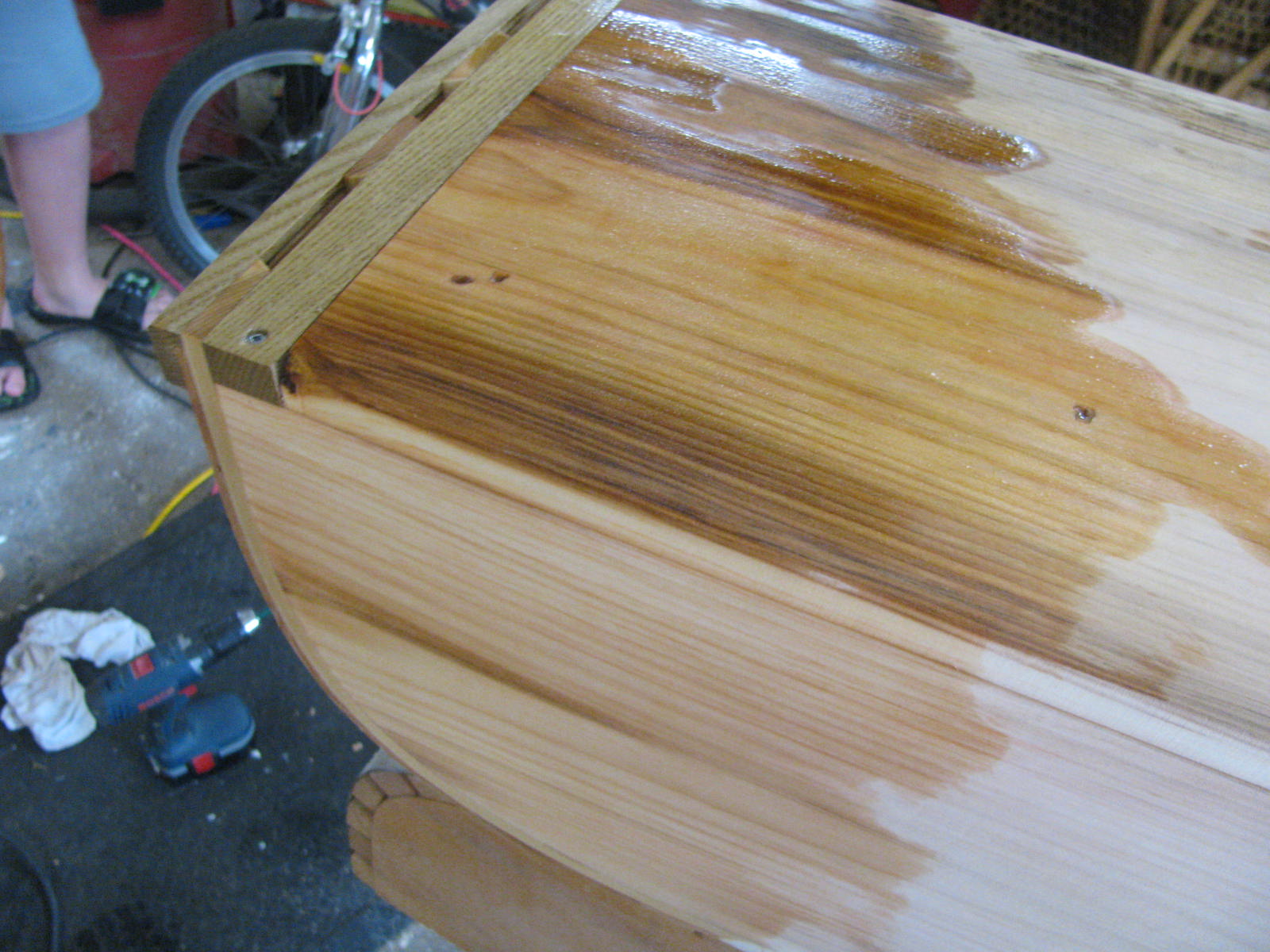
All sanded and ready for finish, this nice looking box has sides laminated from American Chestnut offcuts, with a centre section of ambrosia maple, and two stripes of African Mahogany to highlight the contrast. Inner rails are Ambrosia Maple, outers are Chestnut. White cedar ribs, and planking is red cedar. 


Sanded and ready for oil 


First hit of oil


Soaking up and showing off.


Red Cedar Planking


Another view 


Markings on the maple. From the web, information on wormy silver maple:

Ambrosia maple comes from regular soft maple and Hard Maple trees that have been infested by the ambrosia beetle. The small beetle bores a network of tunnels and short galleries called cradles. A fungus is responsible for the blue, gray and brown streaks and decorative patch work that accompany each tunnel and adjacent wood. The streaks and patch work add a unique look to this hardwood without affecting its structural integrity. This wood is mostly found in the central part of Eastern United States. 
The tunnels made from the beetles are extremely small. The infestation of the ambrosia beetle is terminated during the kiln drying process and will not start again in dry wood as the beetle needs somewhat wet wood to survive. Ambrosia beetles also infest other species such as birch, Aspen and Beech.


Fully oiled


Ready for varnish


Chestnut outer rails


Lid ready for laminating. Two strakes of Sassafrass between the Chestnut and Mahogany


Oiled, varnish next


Sassafrass between the Chestnut and Mahogany, nice and straight grained. Smells great, a shame to seal it!


Sassafrass really shows up on the digital camera

Pine Wanigan

Some of the last of the pine used to strip the building form, almost clear and 18" wide and 18' long, a nice find that had been cut years ago and bought up in Muskoka. Grade 6 teacher went above and beyond to make a real difference in our sons education, helping him reach his full potential. The form was dusted off and a wanigan built. Forgot to snap a picture of it completed with the rope handles, it came out nice. White cedar ribs (what else?) and red cedar planking, with inner and outer rails of American Chestnut, left over from paddle offcuts. 


 Complete, waiting for finish


Other side


First coat of tung oil


Soaking in fast


Colour coming up nicely


Helping out


Focus out front, sailing canoes in the background


Waiting on varnish


First coat, 4 more and it was presented. 


Sunday, 24 May 2015

Latest Freighter update

Here's where it stated:

http://blog.ravenwoodcanoes.com/search/label/freigher

80 lbs of shit fiberglass  - well, 90 pounds of fiberglass, but looking a whole lot better. Really need that 2-3hp outboard soon!


First coat of 2 part Epifanes gloss black. Directly onto scuffed gelcoat, no primer necessary 


Nice contrast with interior


Cant wait to take the blue tape off...


Stern skids. Transom plates go back on next. 


Hang the seats, varnish the rails and go motoring...


TONS of space for kids and gear..

Saturday, 23 May 2015

'Nother Chestnut,late 50s


Fate throws another boat our way, this came from a gentleman who offered this for sale if it got a good home, and it sure will. Best guess is late 1950's, as side decals didnt find their way onto Chestnut products until some time around 1957 its believed. 


This boat was retrieved from Lac Megantic, PQ, my fathers home town. I liked it before i knew that, but this will get restored and kept. 

Originally green, then red, finally blue. 

Build quality was beginning to decline, but at least they got the angle the same on both sides!

Wonderful shape, seems to be an early Pal that replaced the Aster/Moonlight model

Really miss the Champlain we did up in dove grey, and with very similar dimensions the Chestnut has the added bonus of caned seats, heart decks and 2.25" ribs.

Wont take much , although chemical stripping and refinishing are big jobs themselves. Little to no woodwork though, this boats was well used judging by the canvas but not abused. 


Larger ribs


As is typical, canvas rotted along the gunwale, and a small strip of fiberglass was applied to extend its life, and the deep gunwales made to cover. 

Nice upturned ends, brass bang strips still in place and intact


Side decals, placing it late 50s and up. Nice and crooked, right from the factory

Traditional cane pattern

Seats need to be reglued and caned

Heart decks


Rather than a shoe keel, this one has a more traditional early style keel

No lumps or bumps from smashed ribs and planking

Bang strips intact and in great shape


Ah drywall screws, the scourge of all restoration work


1956 catalog showing slant decals, courtesy of Benson Gray and WCHA

1959 catalog showing logo with chestnut, similar to traditional deck decal but englarged. Courtesy of Benson Gray and WCHA